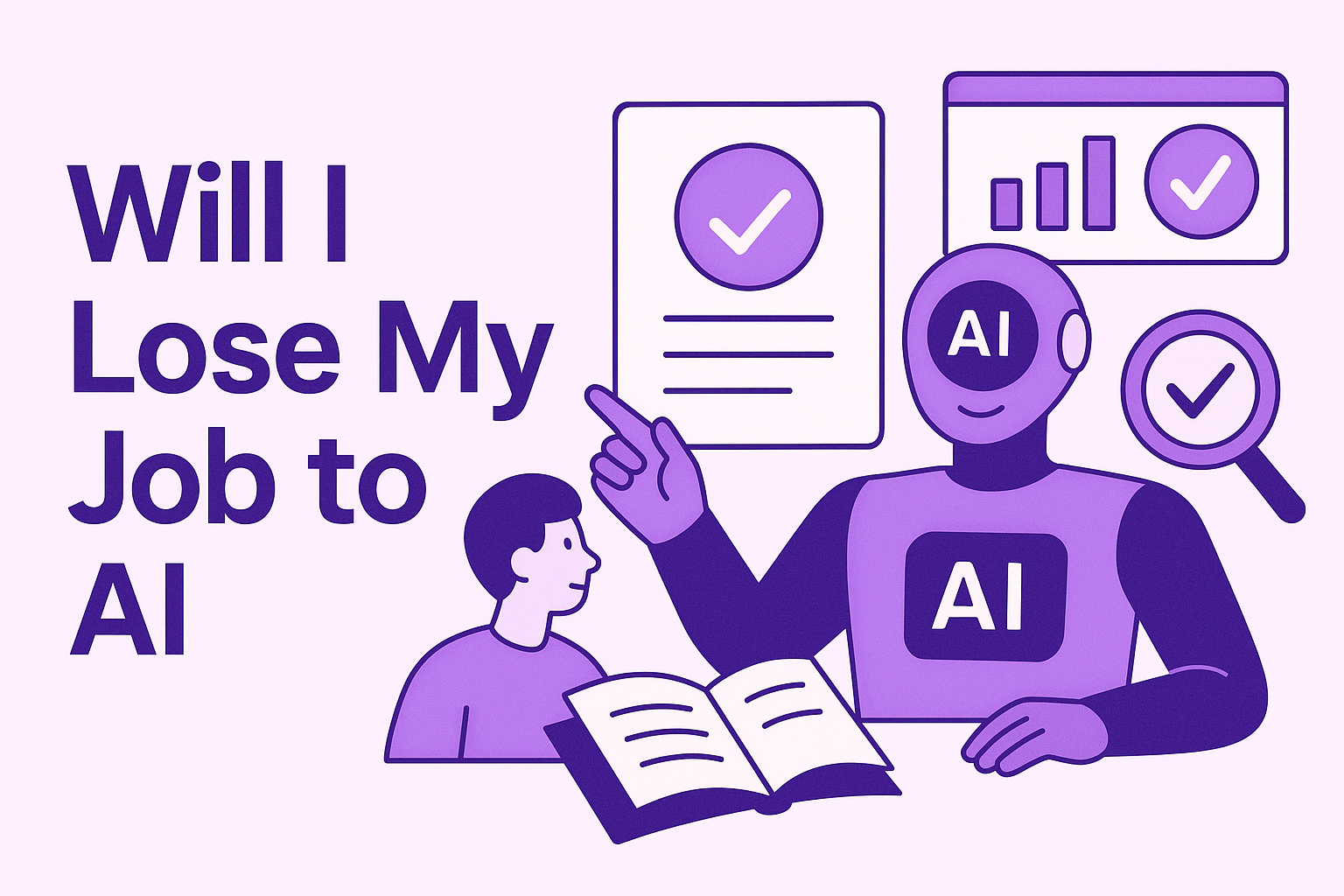
Conversations about AI and employment often center around the frightening prospect of job loss. But that’s the oversimplified version of the story, isn’t it? This narrative of robbing people of their jobs overlooks a more intricate and ultimately more optimistic perspective.
That of job evolution, where tasks morph and change, not just disappear. Advancements in AI don’t necessarily mean wholesale job replacement. They signal a need for adaptability and an evolving skill set in the workforce.
So, let’s shift the dialogue from fear to preparedness, from rampant job loss to job transformation. We’ll look beyond the doomsday headlines and explore how AI can harmonize with human skills to redefine career paths. This way, we can turn a seemingly threatening future into an empowering journey of resilience and growth.
Prospects in the AI Job Market: Threat or Opportunity?
Diving into the details, it’s clear that AI’s impact varies among job types and tasks. Predictable, repeatable tasks are the most vulnerable to automation. Think about a mundane job like data entry. It’s repetitive and rule-driven, making it a prime target for AI. The same applies to basic customer service. An AI chatbot can answer routine questions 24/7 with unwavering patience and precision.
AI-based algorithms can also handle data-intensive tasks more efficiently. Routine analysis, for instance, can be streamlined with machine learning, freeing up time for human workers to tackle more complex issues.
Yet, it’s not all doom and gloom. Automation is not about replacing jobs wholesale. It’s more about swapping out tasks, not occupations. Look closer and you’ll see that AI brings new roles and boosts overall productivity. It’s not a case of man versus machine—we’re talking about a human-AI collaboration that can redefine career paths.
Remember, AI shines in performing tasks, not occupying entire jobs. Its emergence doesn’t simply spell job loss but signals the necessity for reskilling and job transformation. This more nuanced understanding helps us embrace the future of work as an opportunity for career adaptability, rather than a threat.
Unmasking AI Job Myths: Here’s Your Reality Check
Here are some prevalent myths that often ruffle feathers and the facts that should put your mind at ease.
First, the widely-held belief that AI will usurp all human creativity? False. While AI excels in assisting us with tasks, it can’t spontaneously innovate or mimic the human genius of creativity.
Second, the prophecy that AI only bears down on blue-collar jobs? A misconception. Sure, automated processes impact factory jobs, but office roles are also in the process of evolution.
Lastly, feeling like you’ve missed the boat to adapt? That’s another erroneous belief. It’s never too late for continuous learning. In fact, it’s our greatest tool against AI job displacement.
Five Ways To Outfox AI: Your Pragmatic Career Playbook
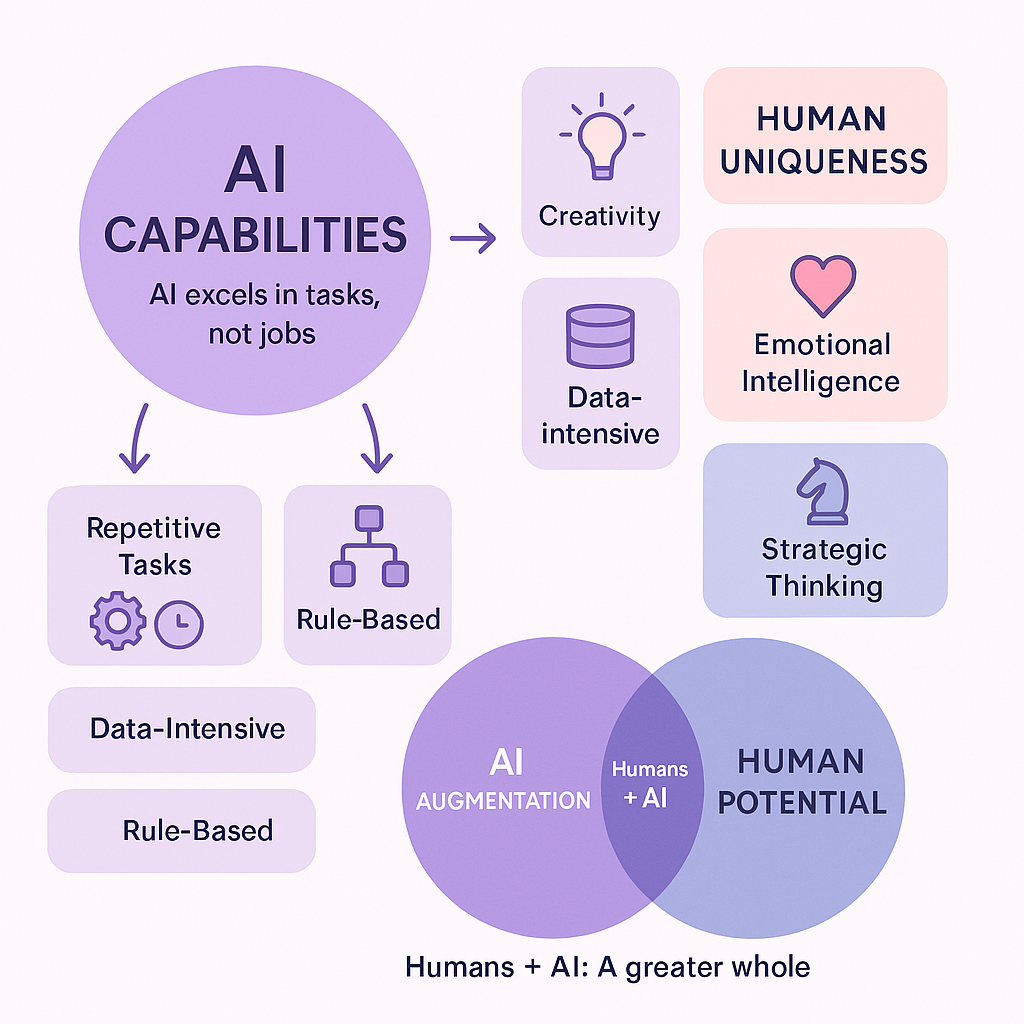
Let’s cut to the chase, you need tangible strategies to thrive in an AI-driven job market. Strategy one: Fortify your ‘human-centric’ skills. Bring creativity, critical thinking, and emotional intelligence to the fore. These attributes aren’t just paycheck-boosters, they’re virtually AI-proof.
Strategy two: Bridle the force of AI to your advantage. Learn to use AI tools to bolster your productivity and marketability. Remember the age-old proverb, “If you can’t beat them, join them”? It applies here too.
Thirdly, develop a thirst for continuous learning. Upskill, reskill, and cross-skill to remain relevant in a dynamic job market. Your education doesn’t end with a degree—it’s a lifelong process.
Fourth, delve into ‘AI-resistant’ specialties. Strategy, for instance, requires human intuition and understanding, making it immune to automation. Likewise, more complex problem-solving roles are less susceptible to AI displacement.
Lastly, scramble up the career ladder with an ‘adaptability mindset’. Build resilience and open-mindedness towards change. With rapidly evolving job market trends, spurred by advances in AI, those who adapt swiftly will leapfrog ahead.
By choosing these strategies, you assure the new age of AI is an age of opportunity for you. Your career success lies not in fearing AI, but in harnessing its power to your advantage. This is your unfair advantage. Embrace it.
Trusted Sources to Boost Your AI Skillset
So, how can you start developing your AI knowledge and skills? For starters, delve into online course platforms, such as Coursera and edX. These platforms offer a diverse suite of courses ranging from AI basics to advanced concepts for working professionals. Bootcamps exclusive to AI, like those offered by Metis or Springboard, are worth exploring too. They provide intensive, focused training that can rapidly uplevel your AI proficiency.
Alongside these, Edubrain stands as a vital resource for those grappling with questions like “will I lose my job to AI?” Committed to helping professionals navigate the evolving job market, Edubrain personalizes learning paths and pitches in as an “AI homework helper”. It simplifies complex skill acquisition and ensures you are adequately prepared for a future where human-AI collaboration is commonplace.
In addition, professional development networks such as LinkedIn Learning and Udacity provide a treasure trove of learning resources. They not only offer courses but also vital connections to a community of learners and professionals.
Just remember, the goal is not to become an AI expert overnight. Instead, strive to understand AI’s impact, engage with it, and continually adapt your skills. Let your fear transform into curiosity. It’s time to embrace the future of work.
Essentials for Building an ‘AI-Ready’ Professional Persona
As we pivot towards an AI-dominated work landscape, the success mantra of professionals will hinge on an AI-ready personal brand. Kickstart your transition by highlighting any AI project experience on your LinkedIn profile – demonstrate how you’ve leveraged AI in previous roles or projects. Display the human attributes that a machine cannot mimic, like leadership abilities, emotional intelligence, and strategic thinking.
Draw into your circle thought leaders who are shaping AI’s future. Engage with their content, share your views, and build mutually beneficial relationships. Penultimate, express your commitment to ongoing learning. On professional platforms, let your bio reflect your quest for knowledge and how it compliments your work ethic.
Remember, building a brand is a continuous process, not a one-off project. Persistently embrace these steps and let the world know that you’re ready for the future of work. Results won’t follow immediately, but with due consistency, your professional persona will evolve to be AI-efficient, resilient, and future-proof.
Humans and AI: Partners in the Workforce
The vision for our future, according to Dr. Anya Sharma, an esteemed AI Ethicist at FutureWorks Institute, isn’t a conflict between humans and machines. Rather, she envisions a partnership where both coexist, push the boundaries of innovation, and enhance productivity.
Dr. Sharma affirms that it is futile to imagine a future dominated by either humans or AI. She asserts, “fearing AI takeover isn’t constructive. Instead, humans need to focus on bolstering their unique capabilities that remain invaluable, such as creativity, critical thinking, and empathy.”
Essentially, it is in enhancing not only our understanding of AI but also our uniquely human abilities that we cultivate an unfair advantage over technology. Thus, it’s vital to adopt a mindset of collaboration with AI in our professional pursuits. Our future, after all, hinges on this symbiotic relationship between man and machine.
Onwards: Turning Fear into Opportunity
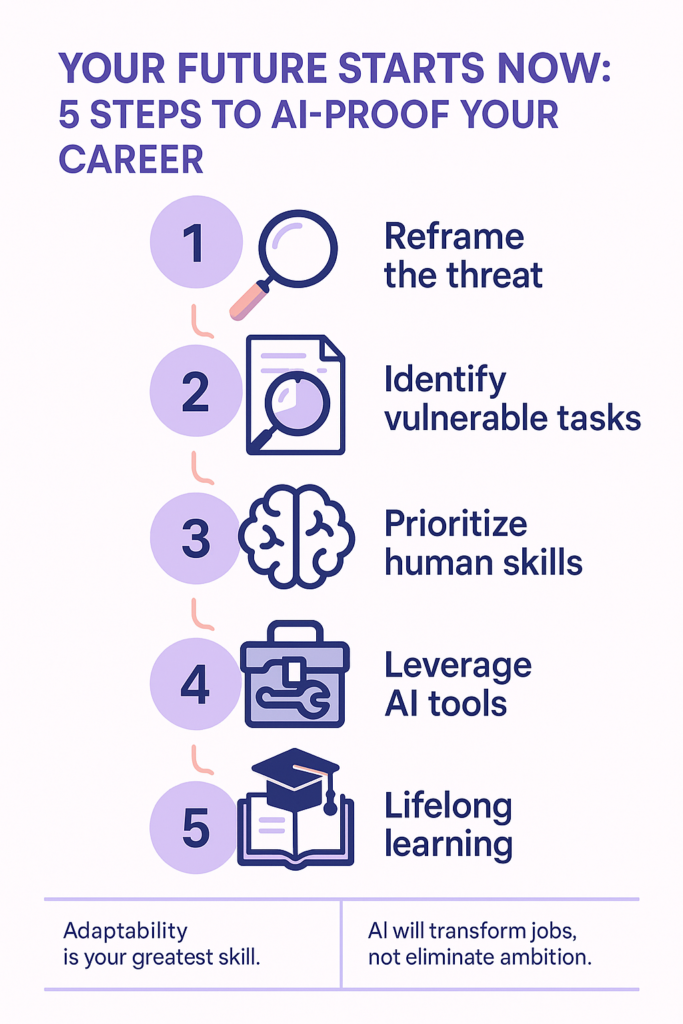
The future is not a battleground between man and machine. It’s a partnership, ignited by our collective capacity for change. We can alter our career trajectory by reframing AI not as an adversary, but as an ally. Pinpoint the parts of your job that are likely to be automated and plan your next steps accordingly. Recognizing and cultivating uniquely human skills can provide a clear advantage in an AI-driven job market. Make efforts to understand AI tools and how they can be leveraged in your field.
Last yet most importantly, commit to the path of continuous learning and pivot your approach according to the emerging AI influences. The journey may seem daunting, but armed with these insights, you’re well-prepared to navigate the future of work.
Mastering the Future: It’s in Our Hands
Let’s make this clear: The future of work isn’t a meteor hurtling towards us, impossible to deflect. Rather, it unfolds like clay under a sculptor’s hand, shaped continuously by our choices, ambitions, and resilience. So, don’t passively brace for AI to disrupt your career. Instead, seize the reins and navigate your professional path with thoughtfulness and flexibility.
Fear holds no real estate in the evolving employment landscape; only your instinct to adapt and lead does. It’s this relentless pursuit of learning, coupled with astute tactical decisions, that will ensure you’re the architect of your career, not a victim of progress. Remember, the future isn’t a threat – it is an invitation to demonstrate just how extraordinarily human you are. Will you accept?